
It is time to meet new places and this time with IaniWorld we add the Argentine Republic to our list of destinations.
Located in the geographic center of the country, Córdoba is the second most populated city in Argentina and will be the protagonist in upcoming articles.
Now we propose a small tour of the locally famous San Roque Dam, located a short distance from the city in the middle of a beautiful landscape surrounded by cities, rivers and mountains.
The Córdoba Mountains, located in the province of the same name, are dotted with numerous lakes and dams linked intimately to obtain hydraulic energy and the San Roque Dam is one of them.
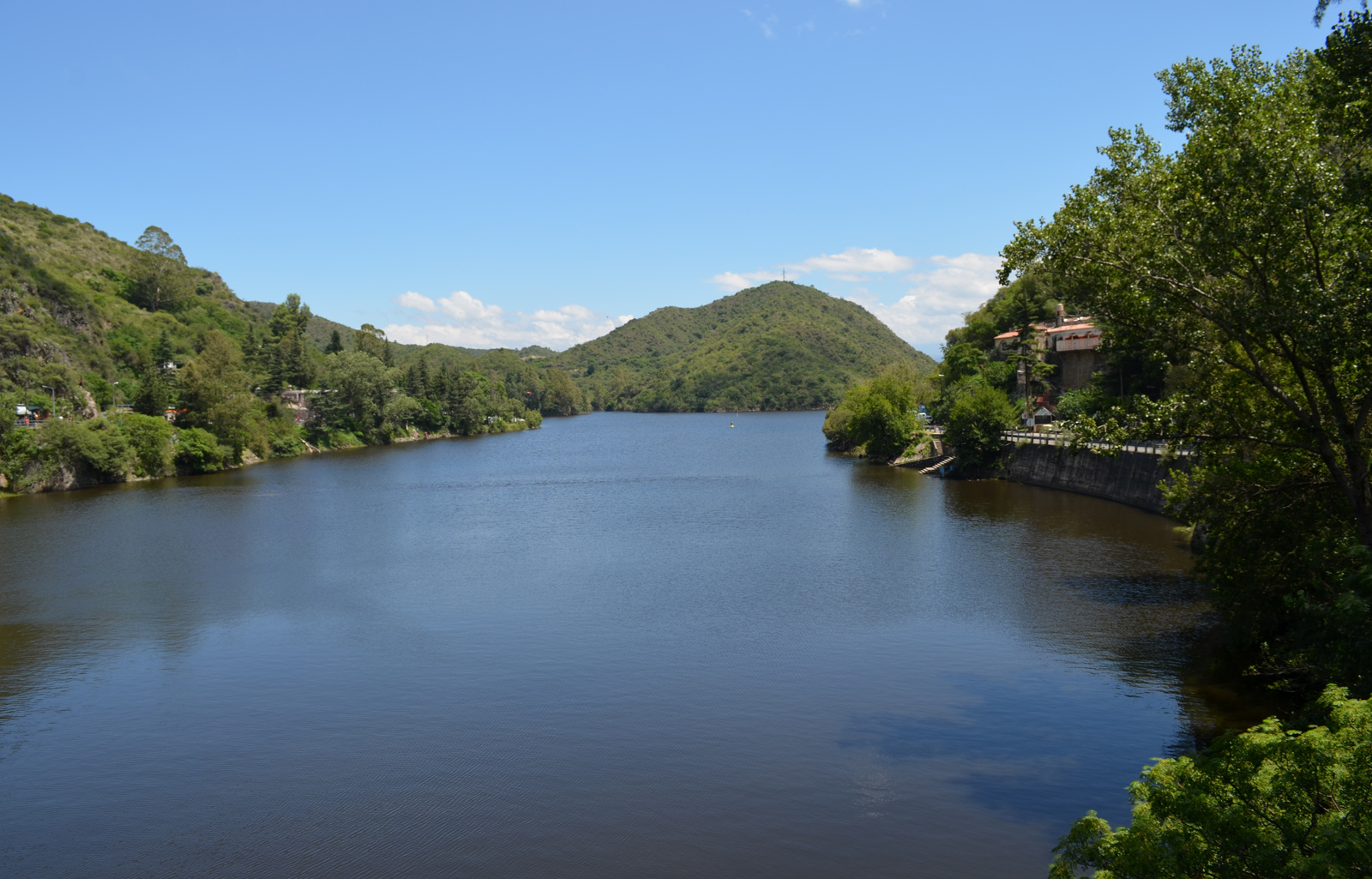
This dam was inaugurated in 1890, giving life to the San Roque Lake, which soon surrounded itself with cities and became famous for its waters suitable for different water sports.
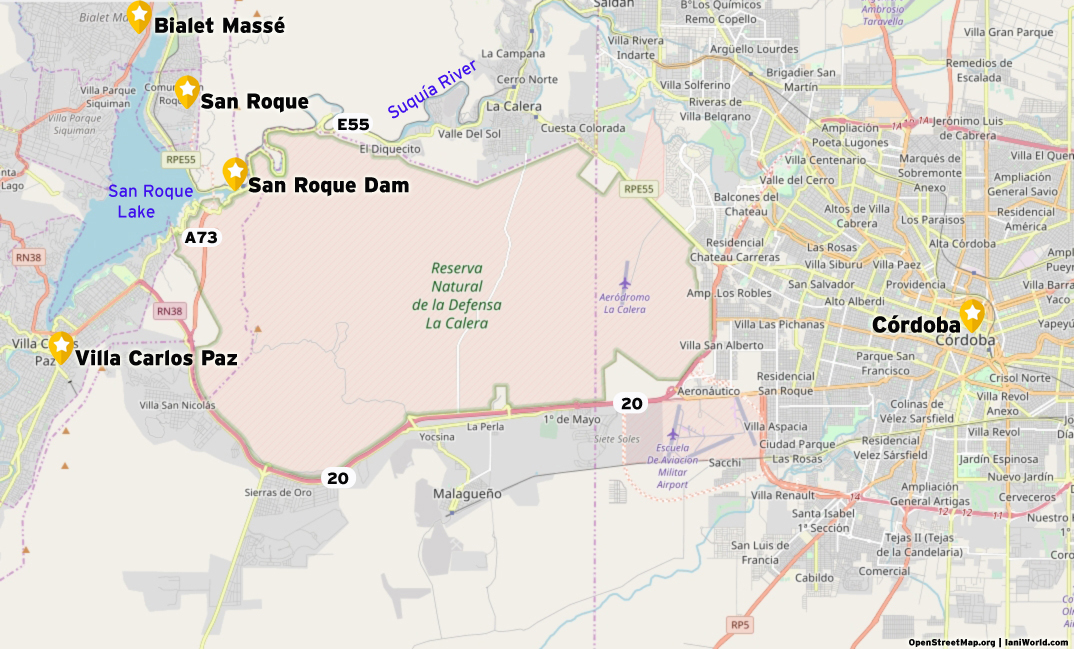
From the city of Córdoba we depart to the west, and after traveling only 24 kilometers we arrive at the lake, located in the Punilla Valley.

This body of water has an area of 16 square kilometers, about 10 kilometers long, 2 wide and a maximum depth of 45 meters (147 feet).
With the exception of a small mountainous portion to the east of it, the rest of its margins are populated by small cities, Villa Carlos Paz being the most important.
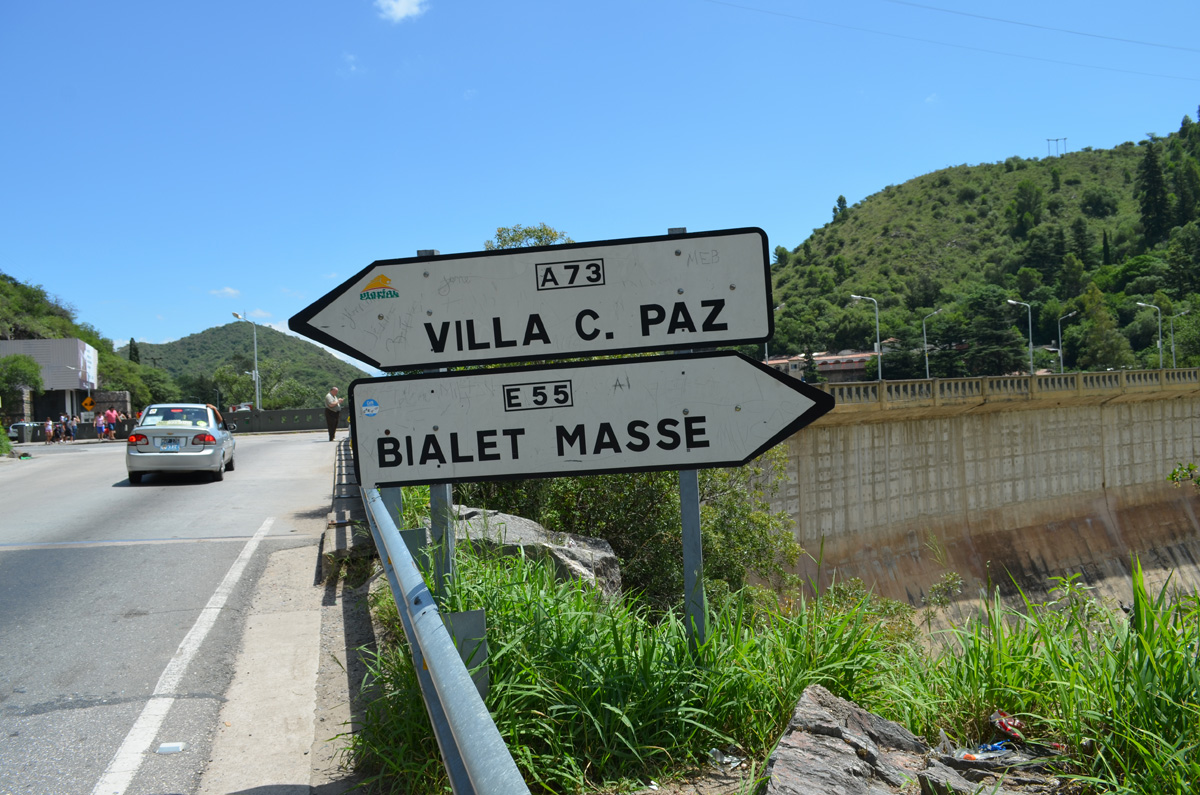
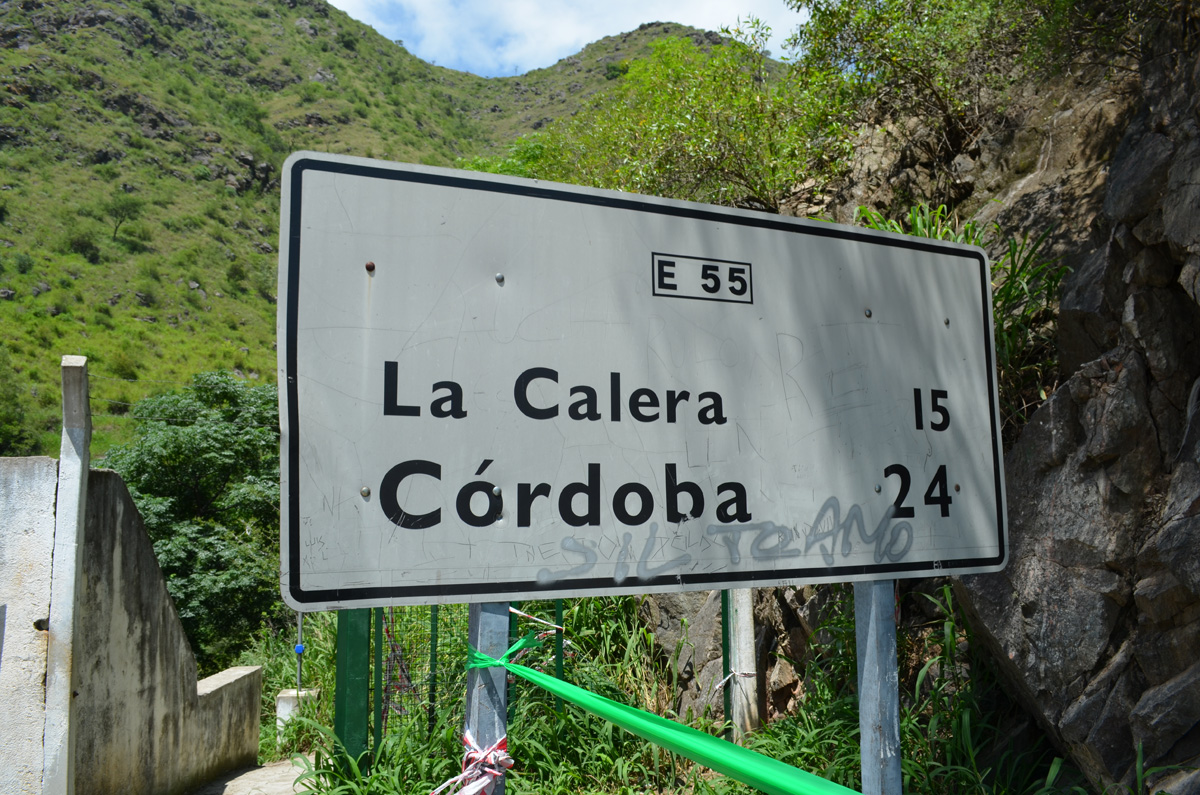
To get to the dam sector, we must take Route E-55 or Route A-73, known as the Costa Azul Variant.
The huge wall of the San Roque Dam is a must for those who travel the E-55 route between the city of Córdoba and the Punilla Valley.
This sector, located in a corner between the mountains, is located east of the lake and is very popular in summer and weekends by tourists who come to know the site and take pictures.
The birth of a dam
The first wall of the San Roque Dam was built between the years 1880 and 1890, taking advantage of the waters of the Cosquín, San Antonio, Los Chorrillos and Las Mojarras rivers.
The main objectives of the construction were the generation of electricity and the water supply to the city of Córdoba.
That construction was in charge of the French engineer Eugenio Dumesnil and the Argentine Carlos Adolfo Cassafousth.
The development was carried out by the construction company of Juan Bialet Massé, a Spaniard who arrived in the country in 1873. For this construction, stone, sand and hydraulic lime were used.
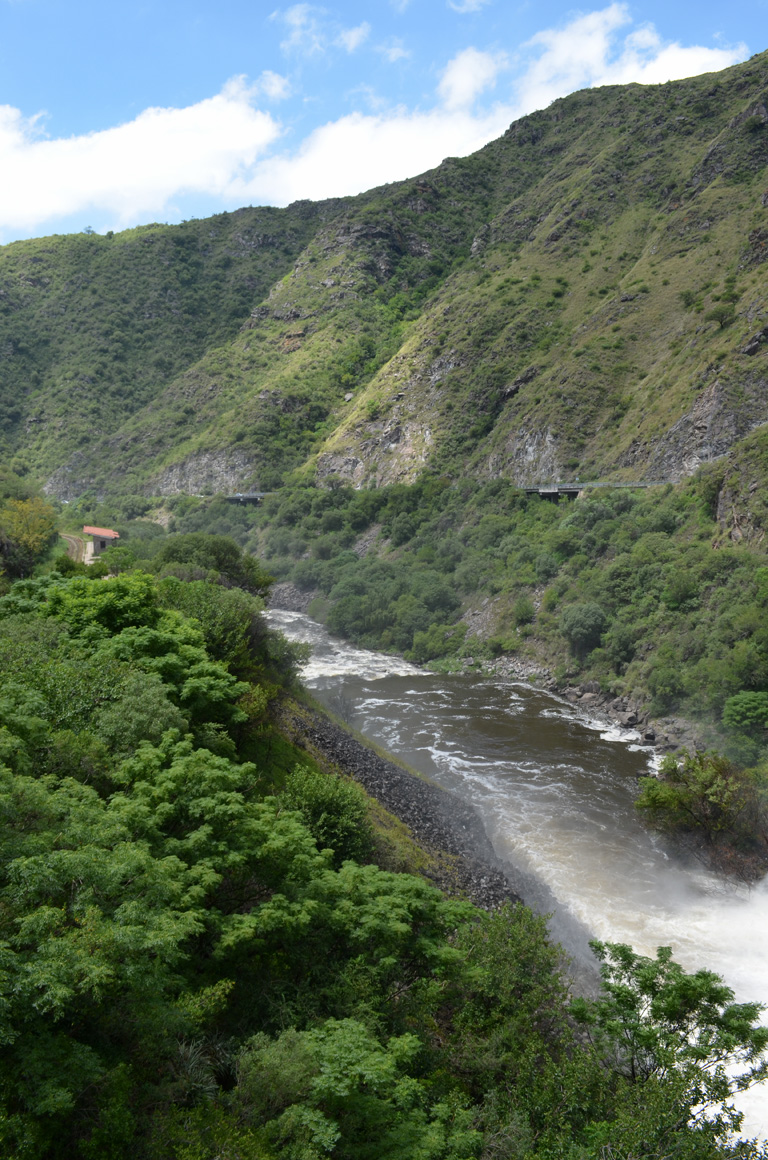
The construction of a little dam waters below by Eugenio Dumesnil, called Mal Paso, served as a test to know the performance of the limes that would be used in the construction of the San Roque dam.
After the work of Mal Paso, Dumesnil returned to France and the development of the work of San Roque was in the hands of Cassafousth and Bialet Massé.
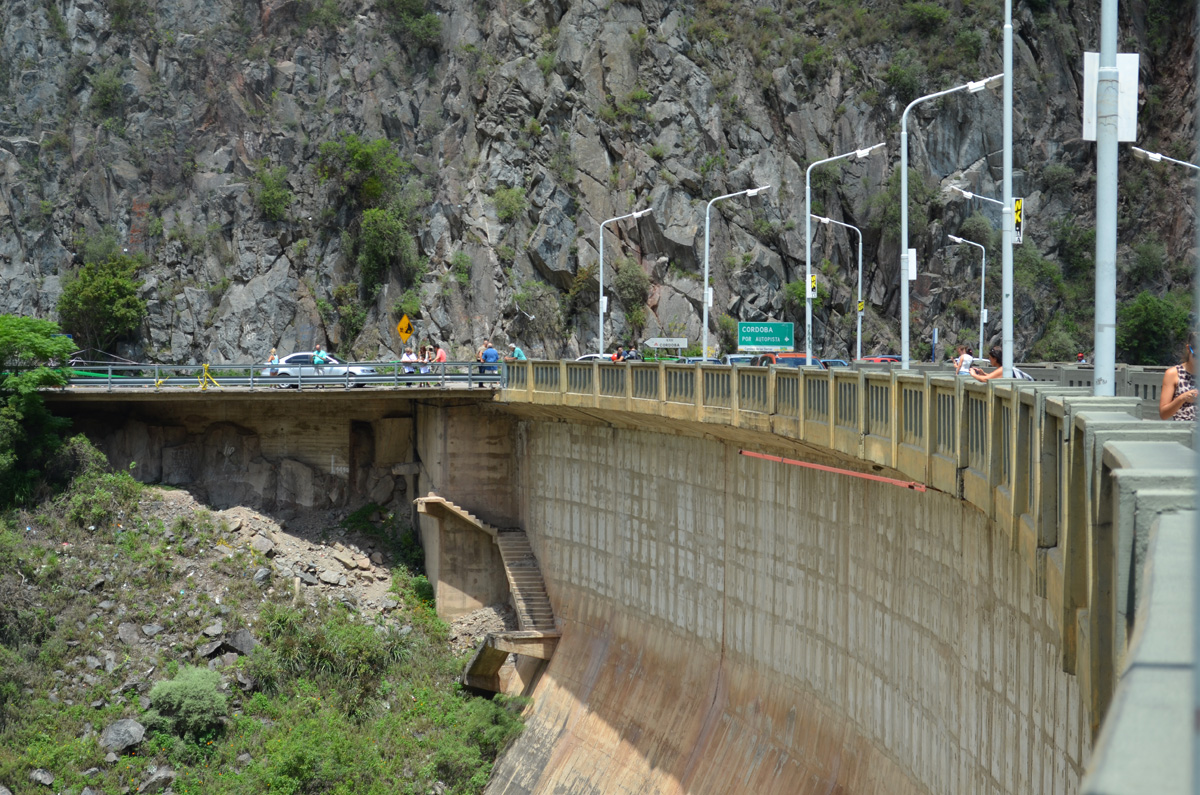
The work employed 3,000 workers and was inaugurated on April 12, 1890. The resulting wall at that time was 117 meters long and 37 meters high.
The construction meant a great advance for the region at the time, it was the first dam in South America and the largest artificial reservoir in the world, with 250 million cubic meters of water.
Shortly after the inauguration, Cassafousth and Bialet Massé received accusations of corruption and negligence in the construction of the dam, which put the city of Córdoba in danger if the wall collapsed. Both were put in prison.
Almost a year later, the engineers regained their freedom and finally it was found that there were no problems in the work, but everything originated due to false accusations for political reasons.
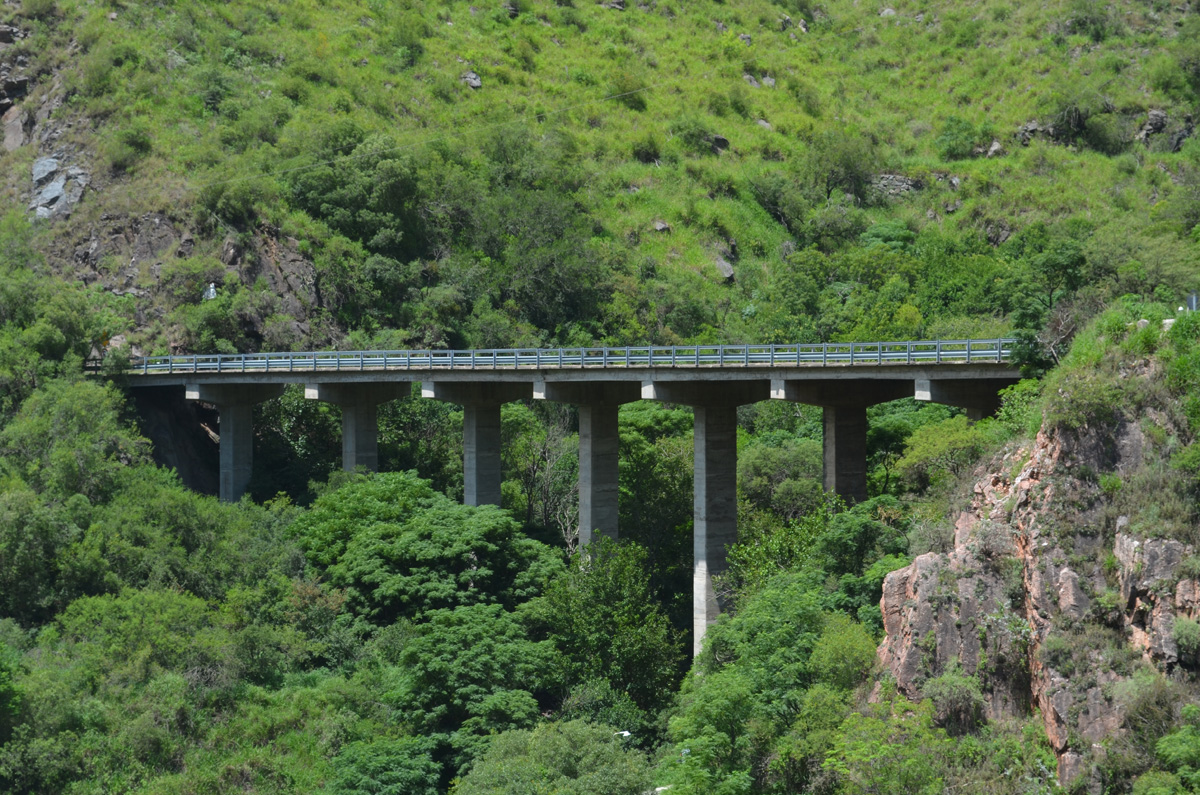
Between the years 1939 and 1944 the construction of the new wall begins, 150 meters downstream of the first. The same materials were used, except for the hydraulic lime that was replaced by portland cement.
Later, plans were made to demolish the old wall using dynamite. Despite the explosives, it only received minor damage in its upper part, remaining practically intact and confirming the injustice that was committed at the time against engineers Cassafousth and Bialet Massé.
Nowadays, when the level of the water descends a few meters, it is still possible to see the old wall.

Walking across San Roque Dam
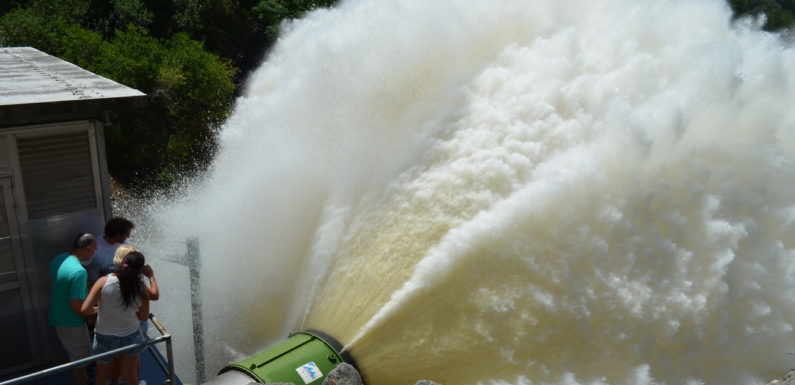
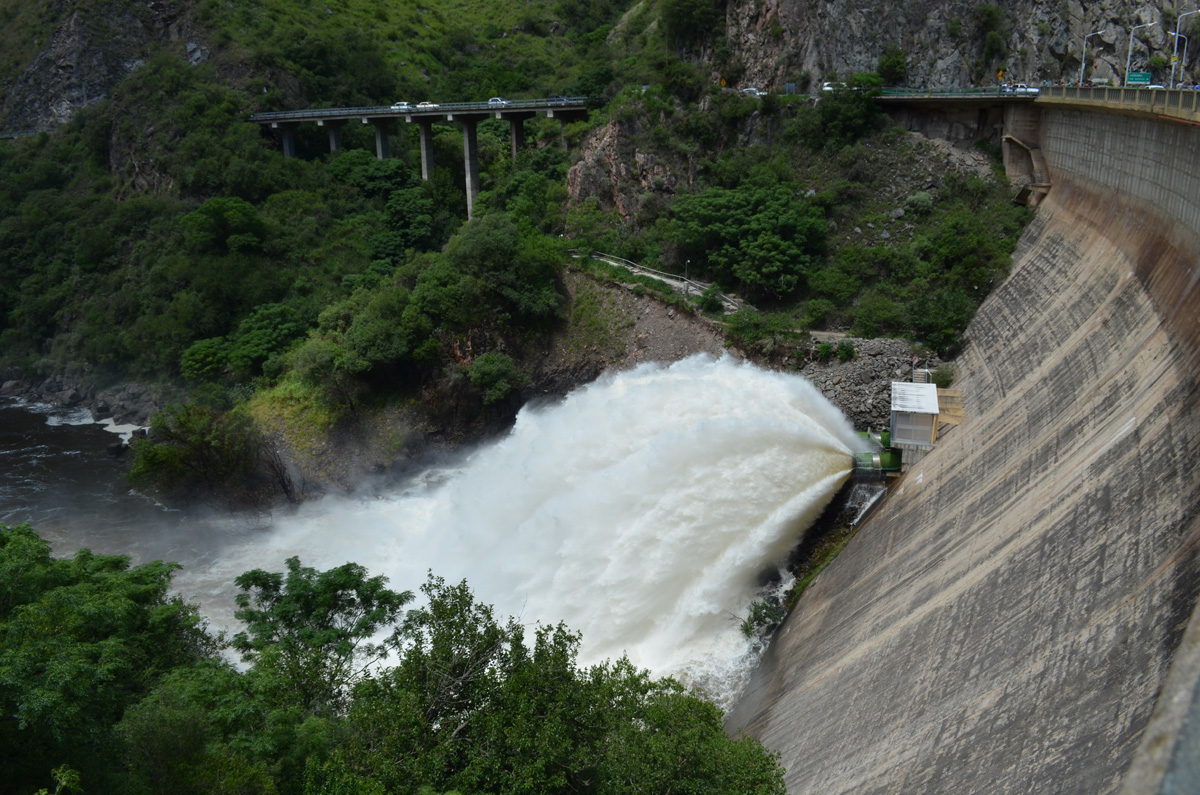
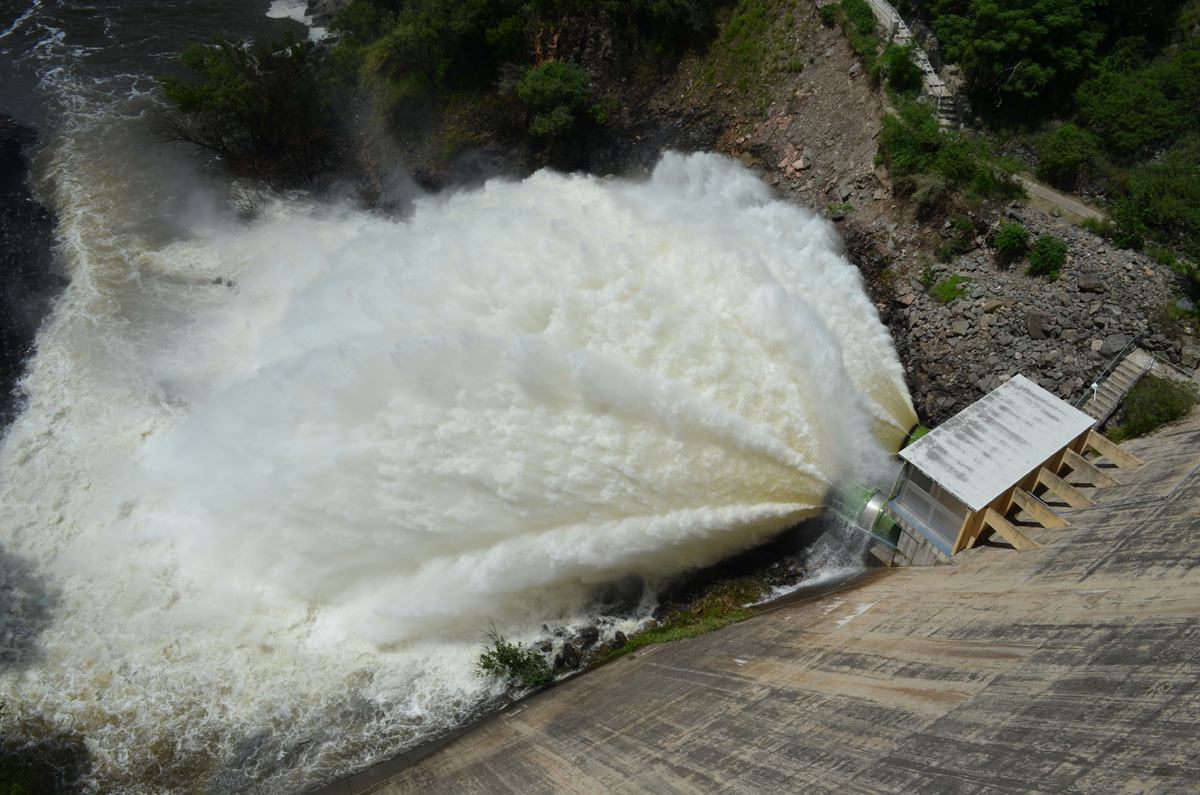
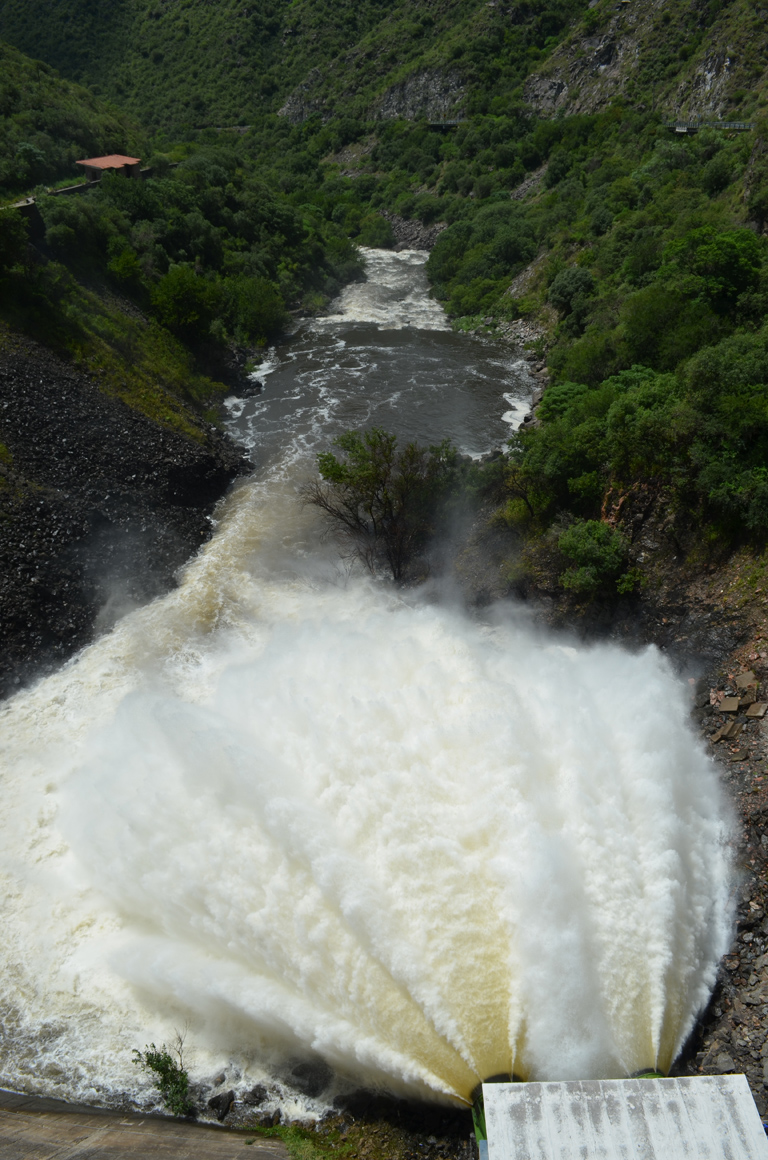
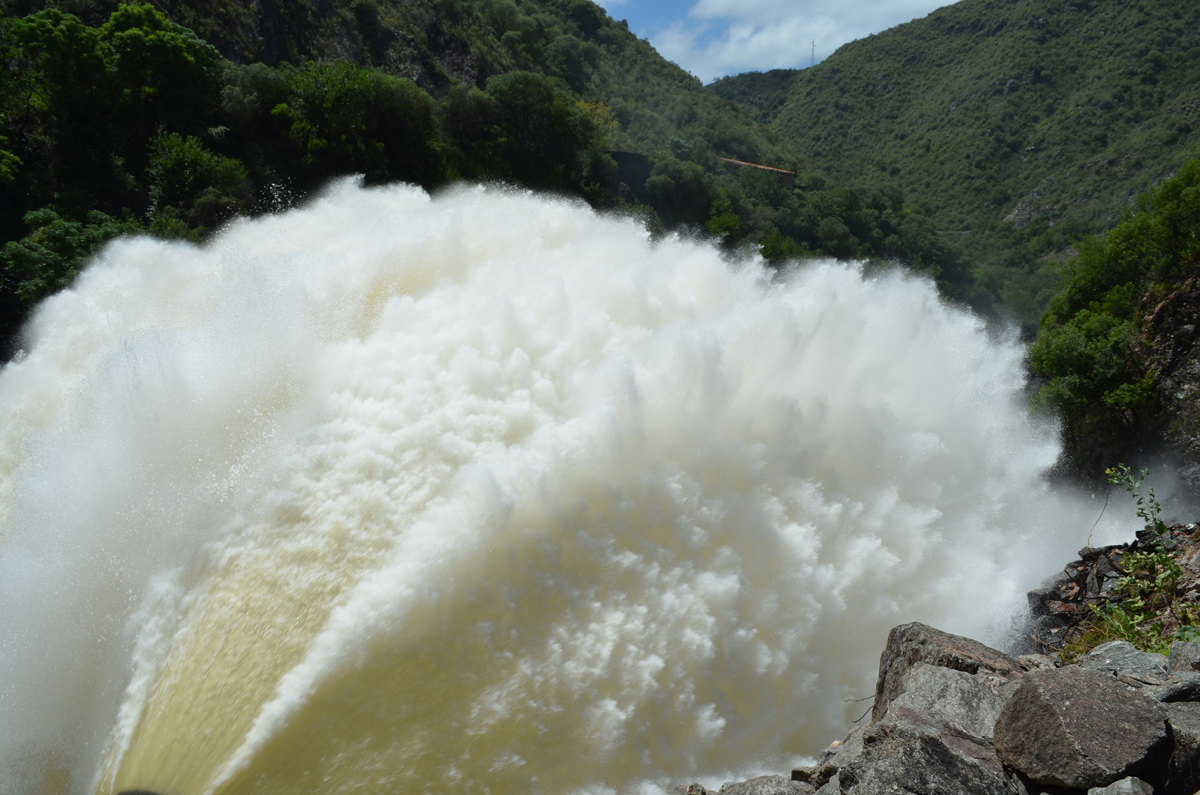
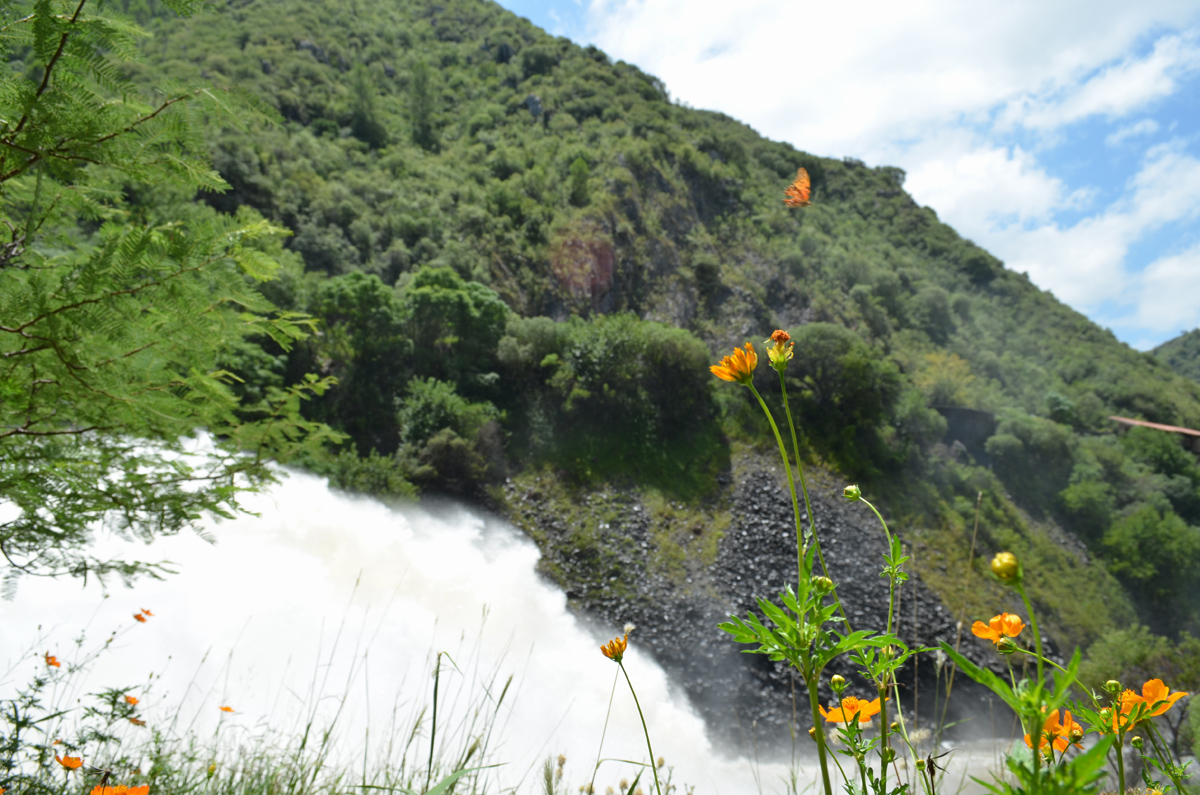
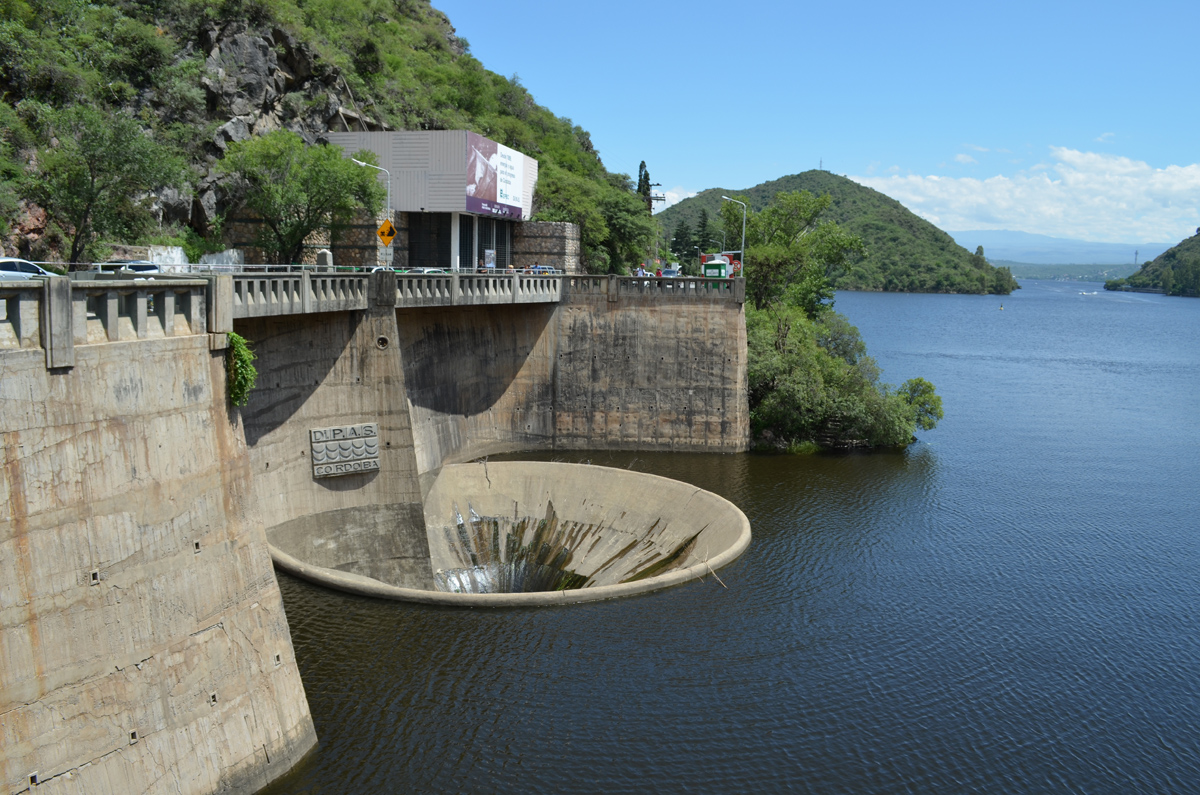
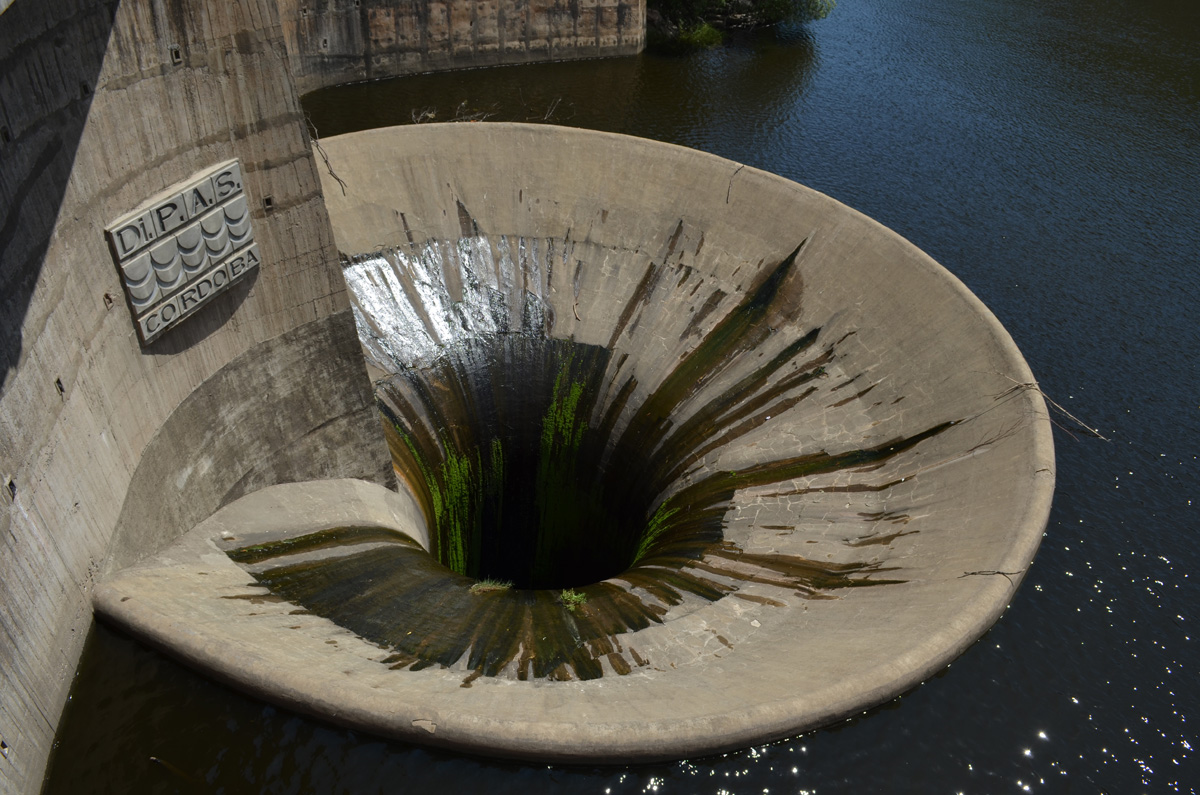
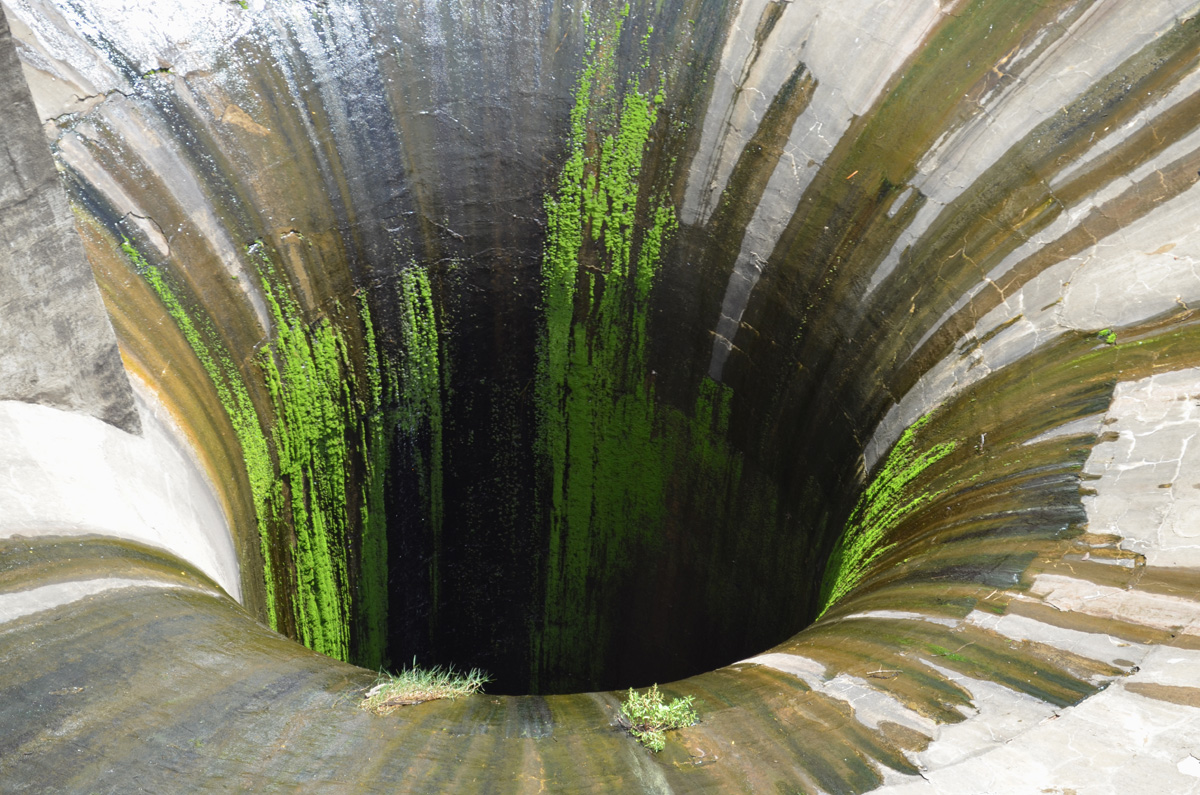
Our visit took place on a sunny day. The water levels of the reservoir were at their limit, so the discharge valves were open creating an impressive fall of water.
The best time to visit the site and the province is in the summer months, when the rains fill the rivers and dams and the mountains are maintained with great greenness.
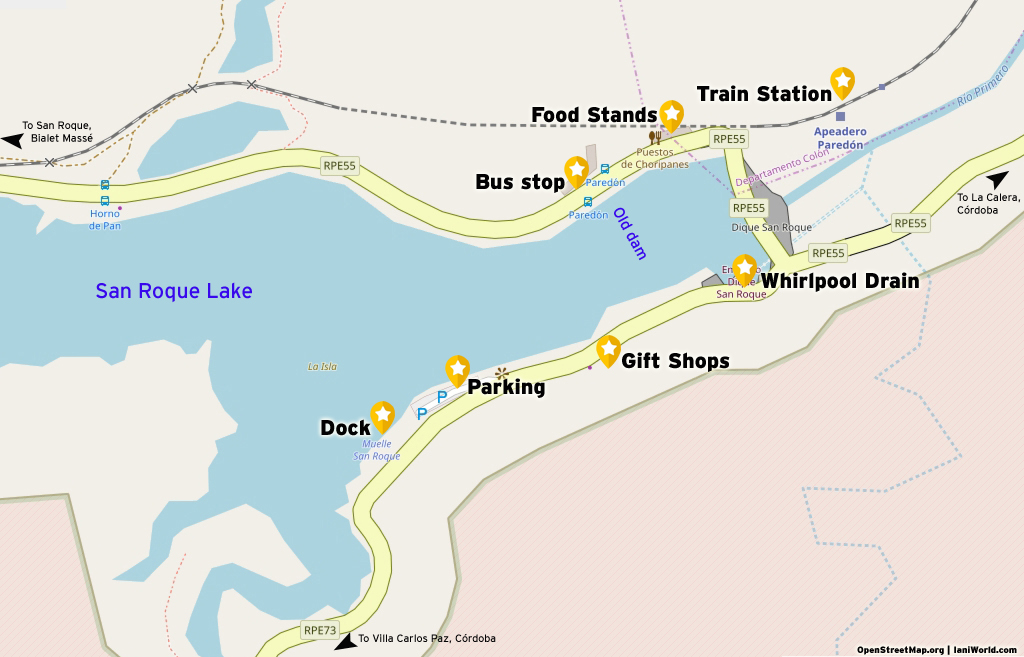
In the vicinity of the wall there is a bus stop and a car parking. In the west sector are located the stands where it is possible to taste the Choripanes or buy cheese and artisan sausages.
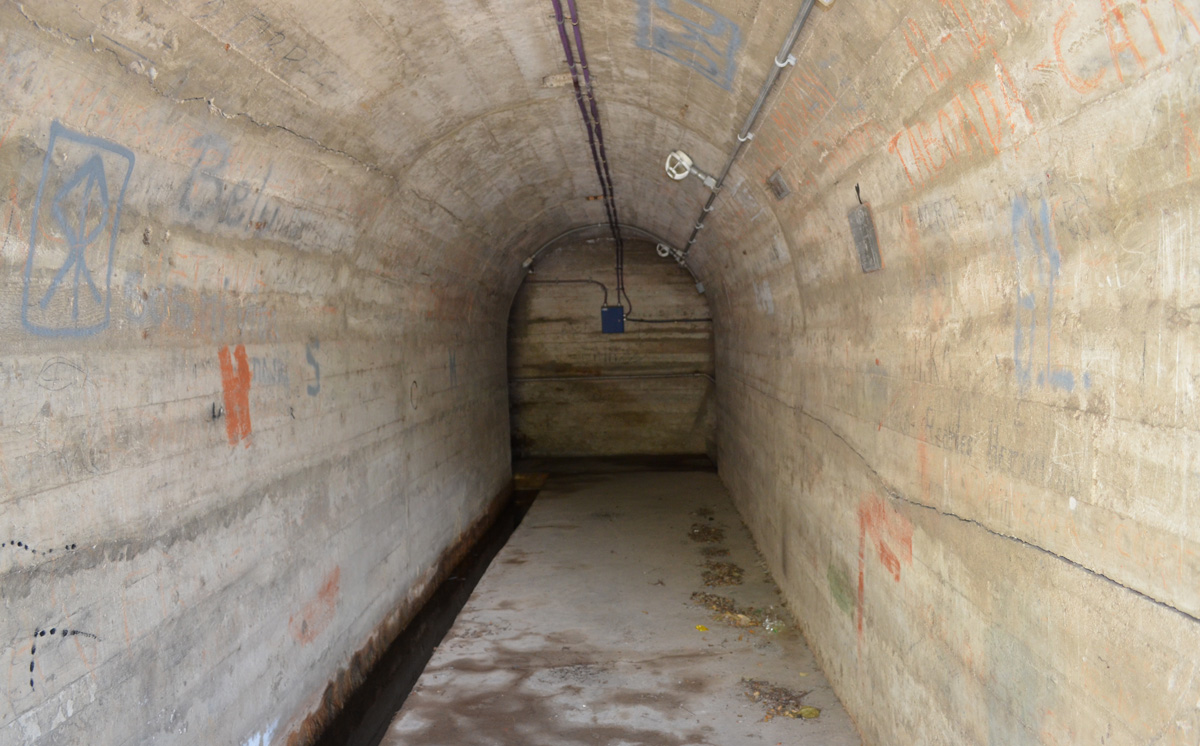
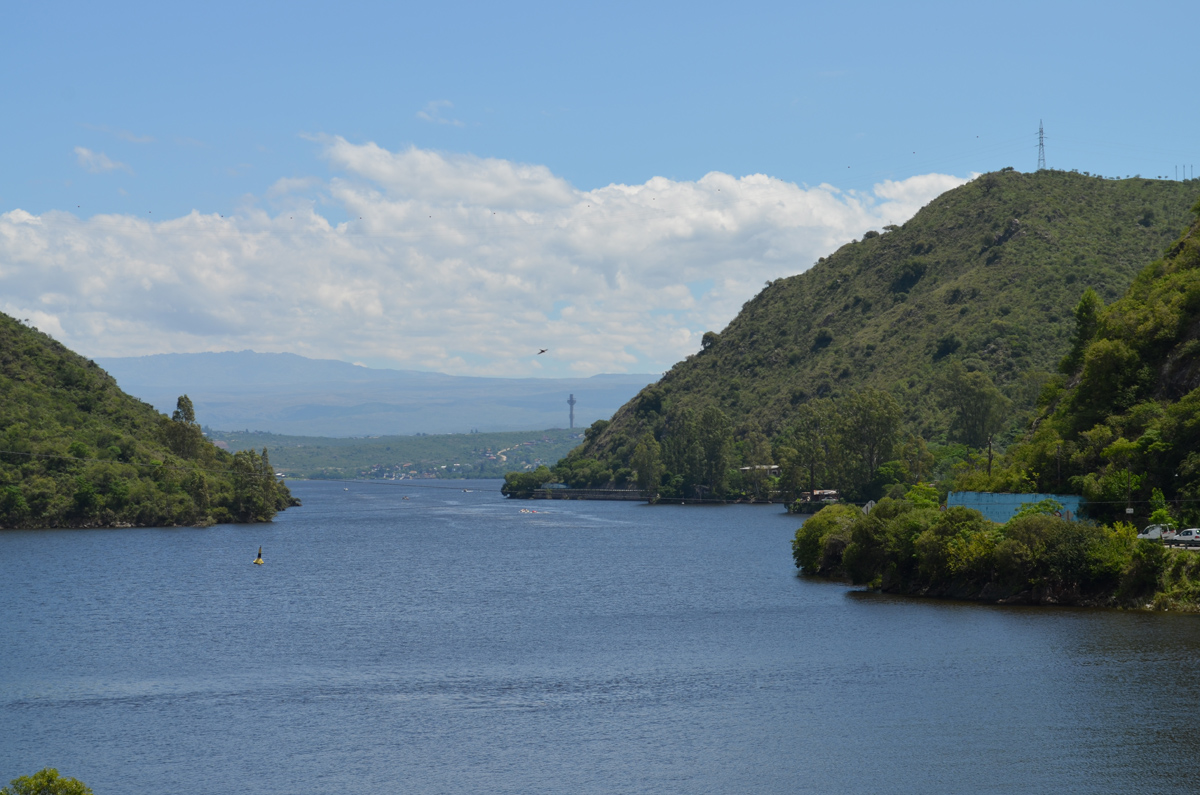
From there we walk along the wall, which is traveled by the route E-55. On the south side we have the lake in all its splendor, surrounded by mountains and with some populations in the background.
In times of low rainfall, part of the old dam wall and a small island stand out to the surface.

On one bank is the famous spillway that helps discharge water from the lake when levels are high.
Crossing the road we can admire the height of the current wall on the stony river and, if we are lucky, perhaps the discharge valves are open forming the great fall of water.
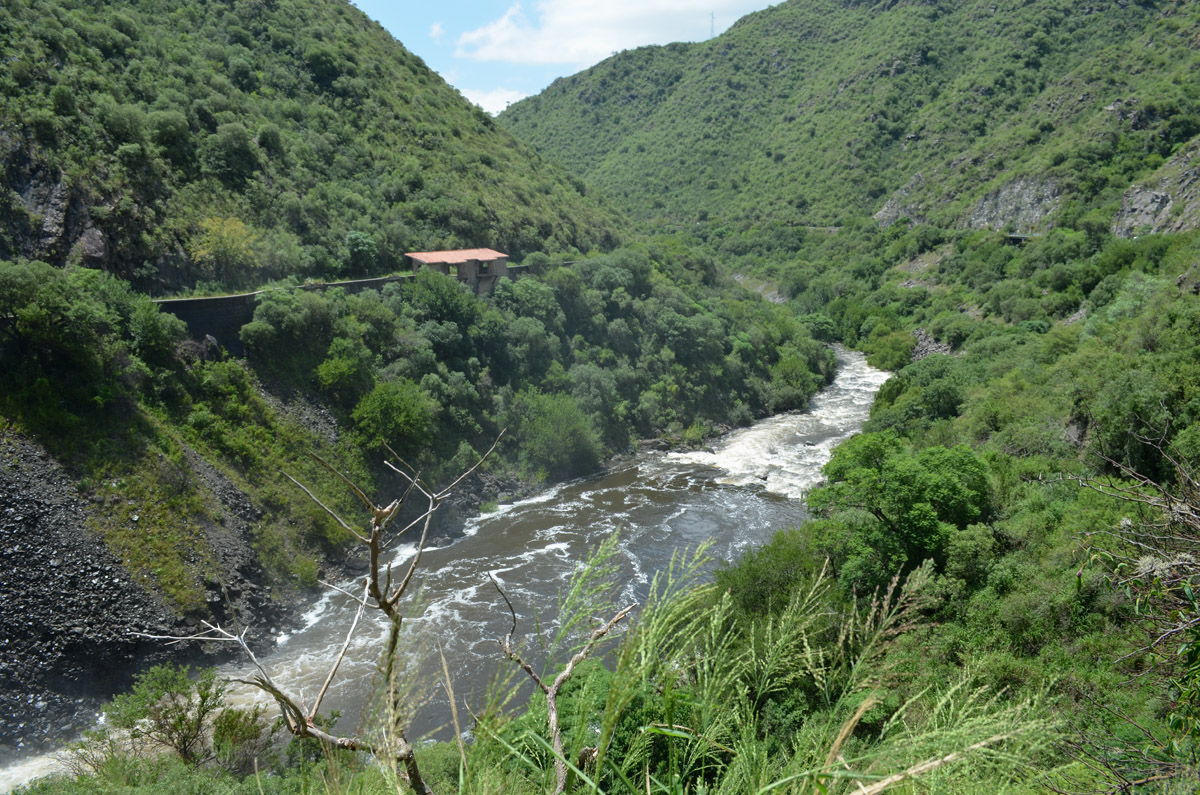
The water course that is born here is the Suquía or Primero River, which kilometers later will circulate through the city of Córdoba and then continue along the immense plain until it flows into the Ansenuza Sea, a huge endorheic lake located northwest of the province.



In the sector located to the east of the dam we have several stalls selling handicrafts and gifts.
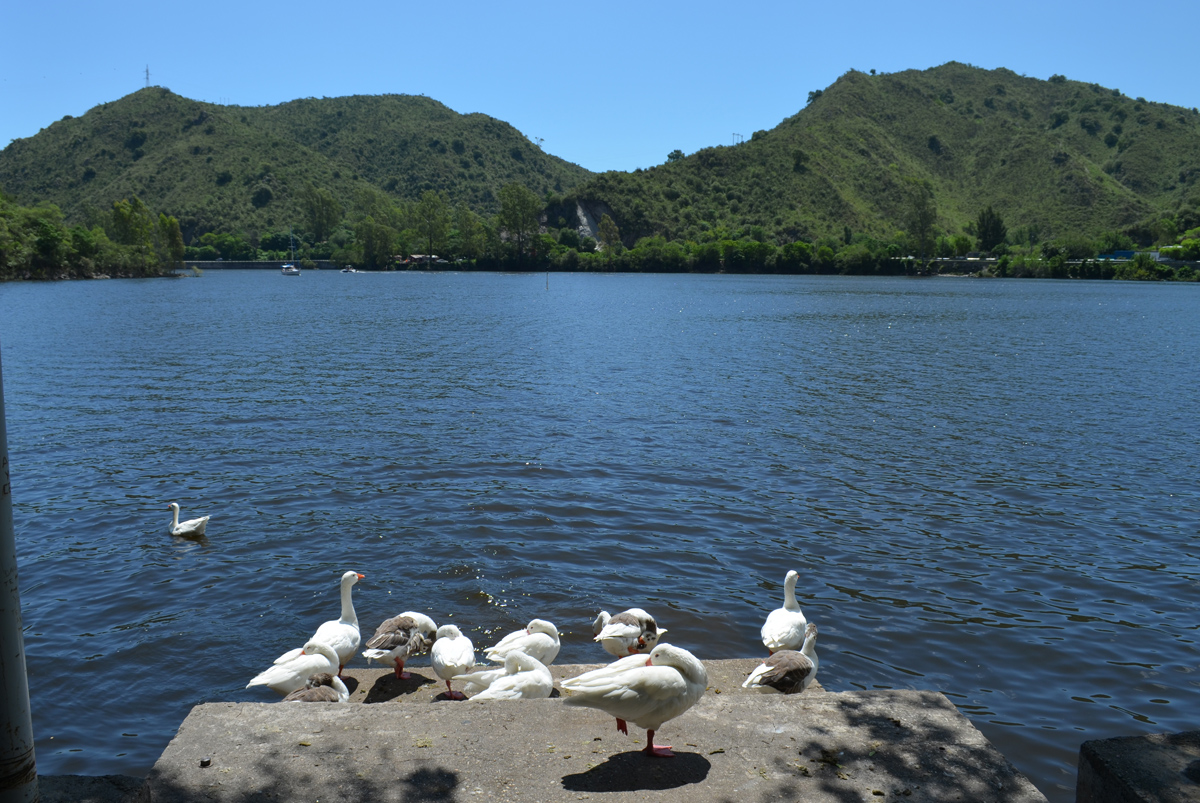
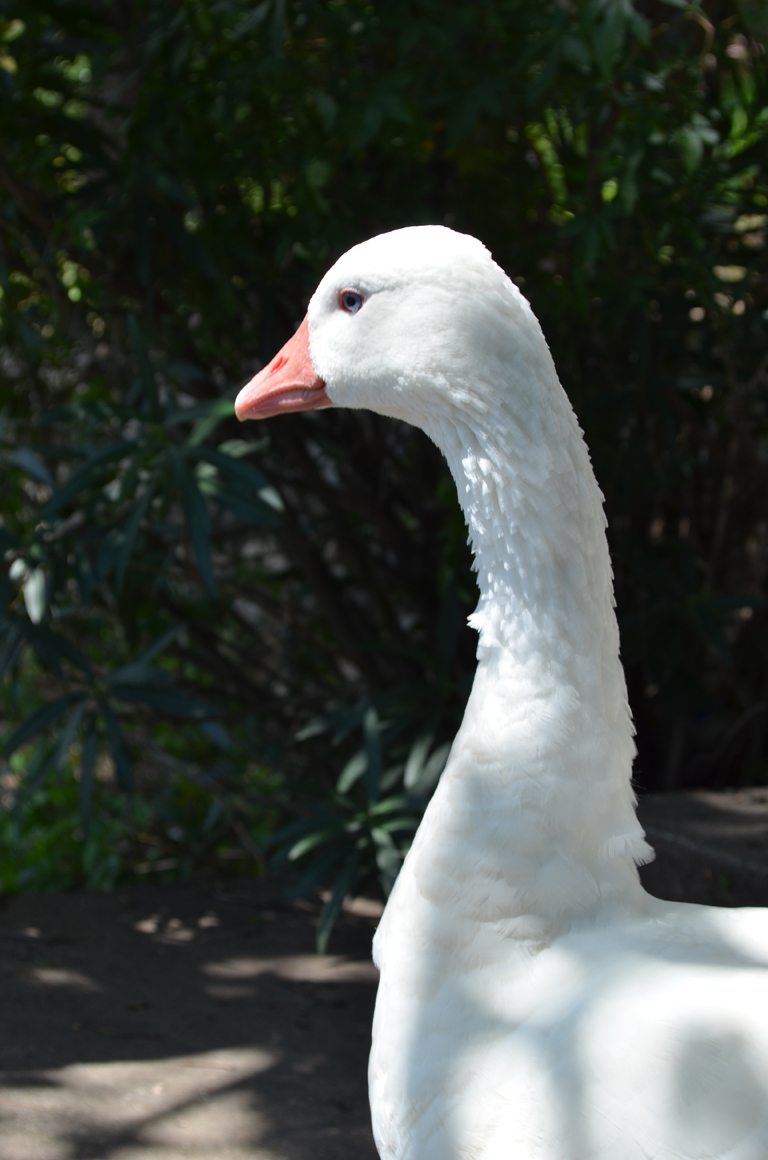
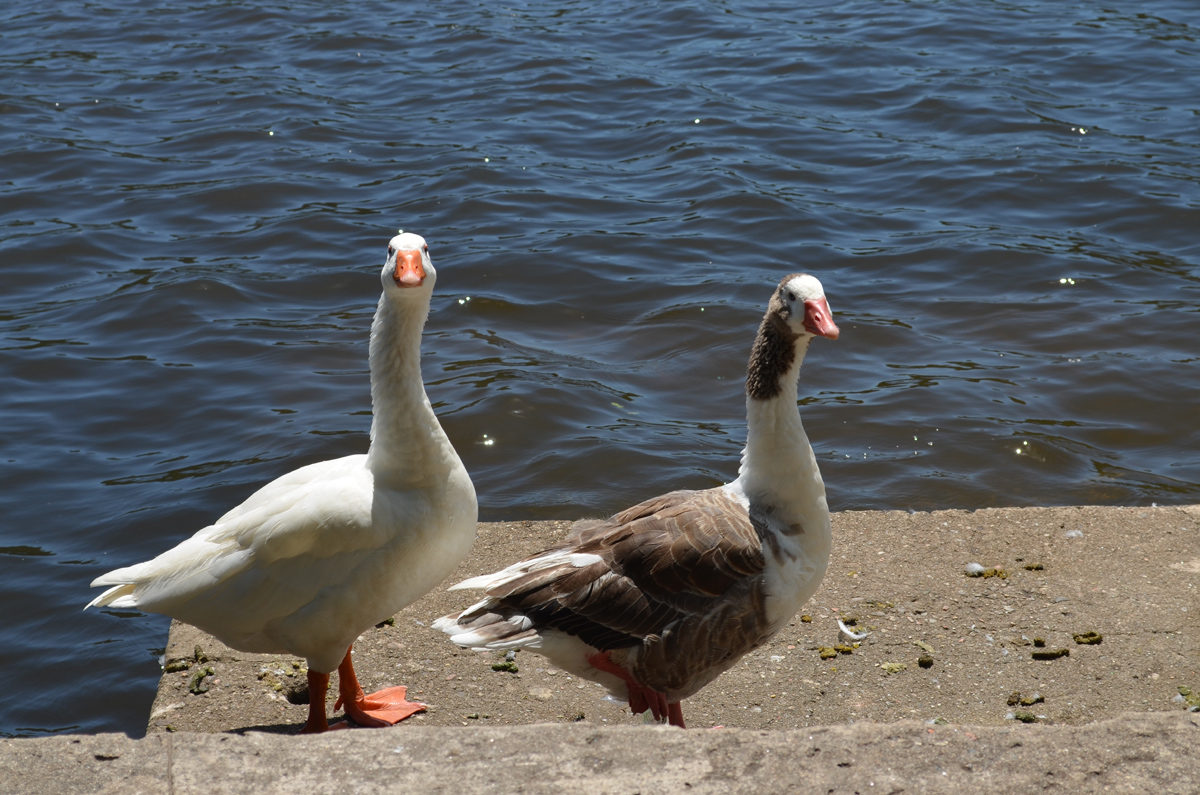
Walking a few meters further south, bordering the lake and close to the parking lot, there is a small dock that is in our visit is occupied by a group of ducks.
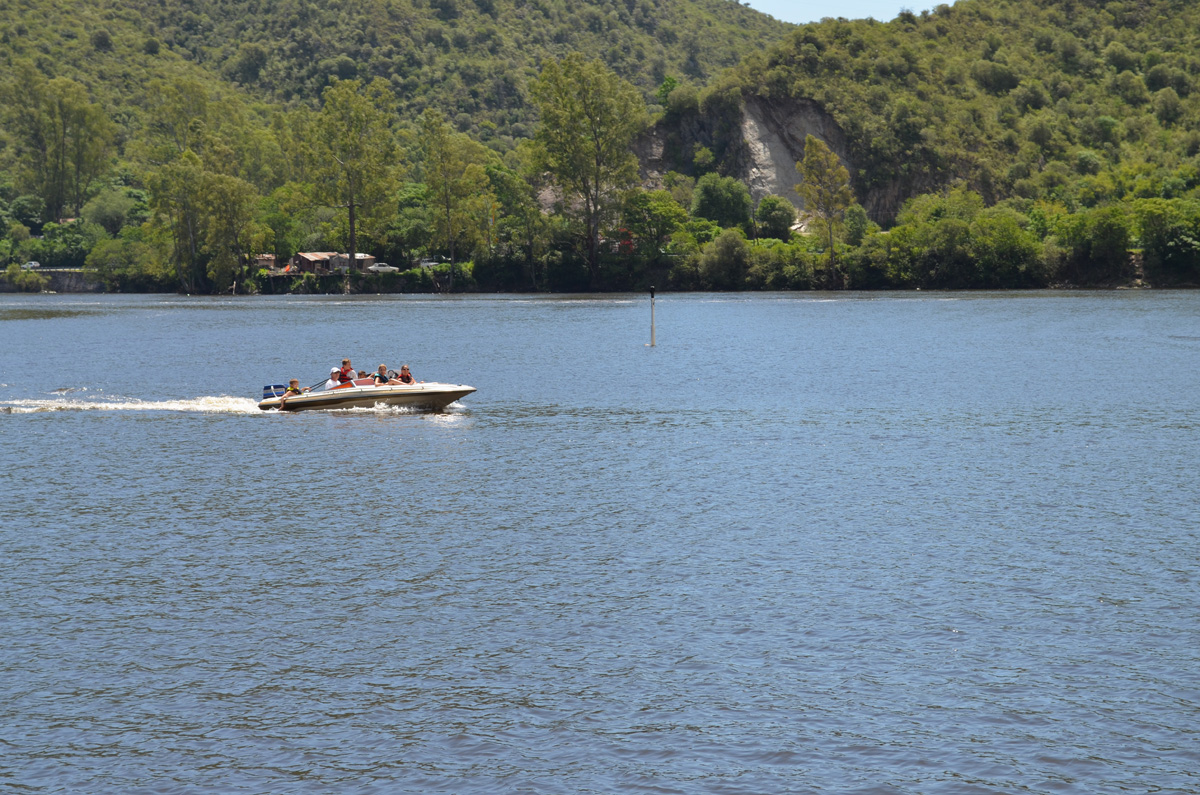
It is common to see sailboats, catamarans, boats or jet skis in the lake, especially in the summer months or weekends.
Some companies offer excursions in catamarans, departing from the city of Villa Carlos Paz and arriving near the dam, to then return to the starting point. The cost approximate is 350 Argentine pesos (11 euros).
You can also rent boats for fishing, jet skis or sailboats.
In upcoming posts we will be visiting other locations that surround San Roque Lake, discovering its nooks and portraying its beautiful landscapes.

Gastronomy and Accommodation
As we said earlier, on the west side of the dam wall we have small stands where the protagonist is the choripán, a chorizo sausage that is served between two pieces of bread, famous in Argentine gastronomy.
Homemade bread, sausages, cheeses, sweets and a wide variety of handicrafts are also available.
About 3 kilometers to the west, in the town of San Roque, we find several types of restaurants and grills where you can eat roast beef, fish and other dishes.
In nearby towns such as Bialet Massé or Villa Carlos Paz there are more gastronomic establishments that complement the offer.
This region of the Province of Córdoba is very touristy, so we have a wide range of accommodation.
Very close to the dam are the towns of San Roque and Bialet Massé, there we find various accommodations such as inns, hotels and cottages. Some of them are Posada Del Sol Golf Club & Resort, Estancia Santa Leocadia, Cabañas Nuestros Hijos, Bialet Massé Hotel, Cabañas El Tala and La Fortaleza Hostel.
The city of Villa Carlos Paz, located in the southern sector of Lake San Roque, is the largest in the valley and the one that offers the most variety in lodging.
Transport
San Roque Lake is large and has several cities on its banks. The site visited today is the dam, located east of it.
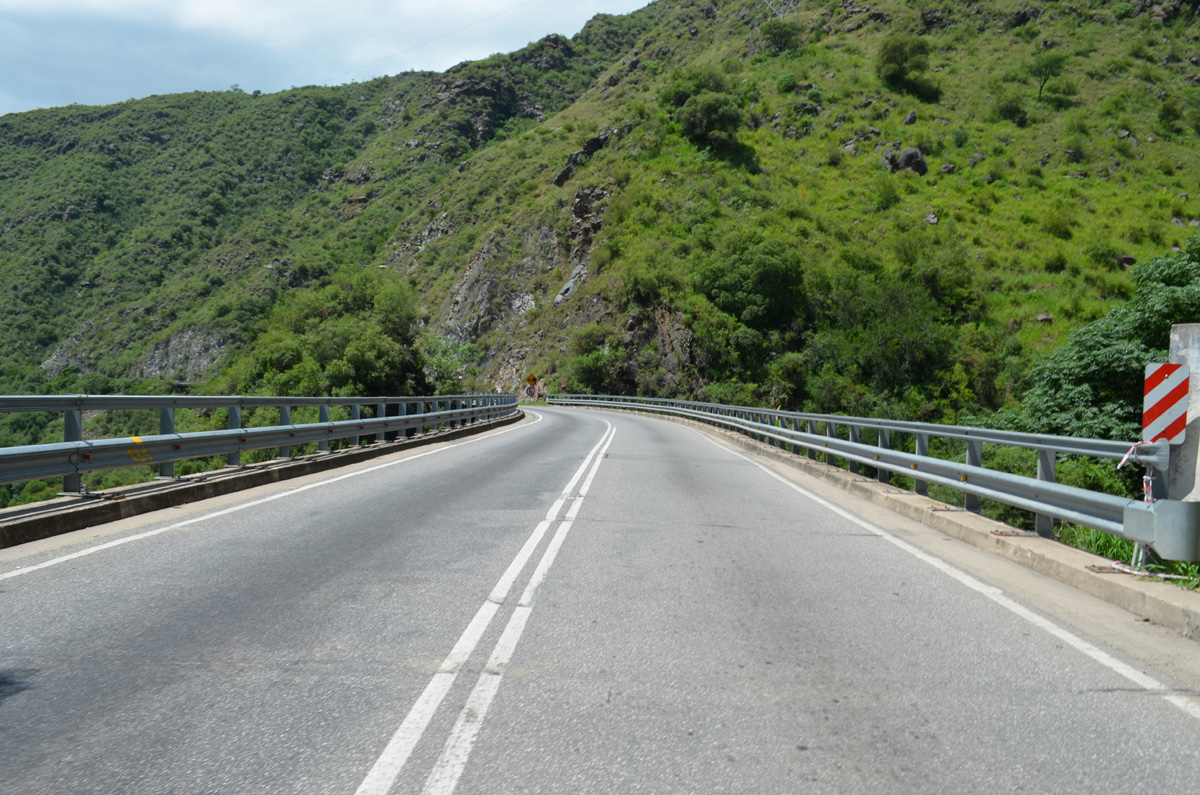
To get to this place from the city of Córdoba we can take the Provincial Route E-55, which crosses the city of La Calera and runs through a winding valley between mountains, parallel to the Suquía River and the railway.
Another option to take the Highway 20, and before entering the city of Villa Carlos Paz, turn right onto the Costa Azul Highway (Route A-73).
From the San Roque Dam, we can access the rest of the towns of the Punilla Valley using the routes E-55 and 38.
Given that the valley is within the metropolitan area of the city of Córdoba, the place of the dam is well traveled by those who are heading to the city, which increases considerably in summer with the large number of tourists. For this reason traffic jams can occur in the place and it is recommended to go with caution.
To get there by public transport, we have the Tren de las Sierras, the only commuter train line that operates in the city of Córdoba, but which, having only three daily services, is used mostly for tourist purposes.
The same part from the Estación Alta Córdoba, in the homonymous city and ends in the city of Cosquín. One of the intermediate stations is located a few meters of the dam.
The price is 6.50 pesos (0.20 euros). Seniors, children and students have discounts.
Another option with more frequencies is the bus. Cooperativa La Calera connects the city of Córdoba with several cities in the Punilla Valley, with a stop just a few meters of the San Roque Dam.
The buses circulate every 45 minutes approximately and the prices are around 65 pesos (2 euros) between Córdoba and the dam, and 15 pesos (0.47 euros) between the dam and the nearby town of San Roque.
Travel by bus from the center of the Córdoba downtown to the dam takes about an hour.